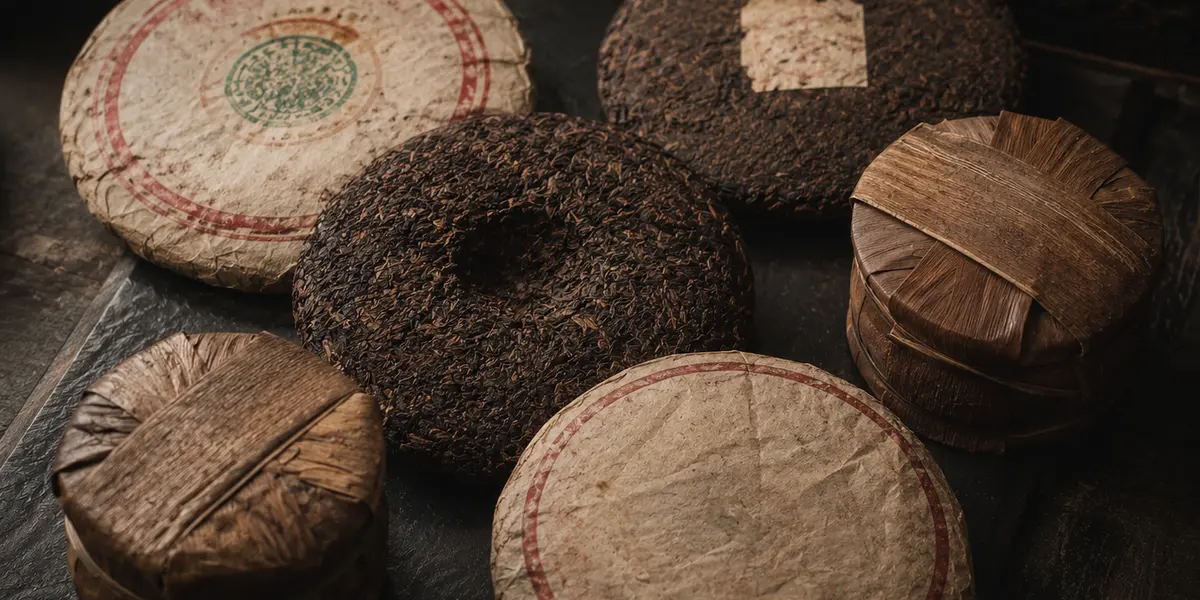
A pu-erh cake is only as good as the factory that pressed it. Behind every wrapper, every nei fei ticket and every lot number stands a team of people who decide which maocha to buy, how long to ferment, how tightly to press, and how to store. At 931 Tea we have tasted hundreds of productions over the years, and we keep coming back to the same handful of makers. Here are the five pu-erh factories we trust — and why we believe they deserve a place in your tea shelf.
1. Menghai Tea Factory / TAETEA (est. 1940)
No list of pu-erh factories can begin anywhere else. The Menghai Tea Factory, home of the Dayi (大益) brand, is the gold standard of the industry. Founded in 1940 in Menghai County, Xishuangbanna, this is the factory that — alongside the Kunming Tea Factory — perfected the wo dui wet-pile fermentation process in the early 1970s and effectively invented shu (ripe) pu-erh as we know it.
The numbers speak for themselves. Dayi's 7572 is the benchmark shu recipe worldwide — a blend of grade 7 and grade 5 maocha, fermented with the same house microbial culture that has been maintained for decades. The liquor is deep chestnut, thick as broth, with notes of dark chocolate, dried longan and a clean, sweet finish that lingers without a trace of pile taste. If you drink only one shu in your life, it should be a 7572. For sheng lovers, the 7542 occupies the same pedestal — a bright, aromatic, firmly structured cake that ages gracefully over decades.
What sets Menghai apart is consistency. Year after year, batch after batch, the core recipes taste the way they should. That reliability is built on the largest maocha reserves in Yunnan and a quality-control culture that borders on obsessive. When we stock Dayi at 931 Tea, we know exactly what our customers will get in the cup.
2. Puwen Tea Factory (est. 1964)
If Menghai is the heavyweight champion, Puwen Tea Factory is the disciplined middleweight that punches well above its weight class. Located in Puwen Township, Ning'er County, the factory has operated since 1964 and sells under its Yunya (云芽) brand. Puwen built its reputation on one thing above all: clean processing.
Walk through the Puwen facility and the first thing you notice is airflow. The drying and fermentation rooms are meticulously ventilated, and the maocha storage is kept at a steady temperature and humidity. The result is shu pu-erh with remarkably little pile taste even when freshly pressed — something that usually takes years of airing to achieve elsewhere. Their signature Yunya Gong Ting (palace-grade) shu uses only the tenderest buds, producing a liquor that is silky, sweet and almost creamy, with a gentle cocoa warmth that makes it an ideal evening tea.
For the price-conscious drinker, Puwen offers outstanding value. Their daily-drinking shu cakes deliver a satisfying, full-bodied cup at a fraction of the cost of equivalent Dayi productions. We stock Puwen at 931 Tea because great pu-erh should not require a great budget.
3. Lang He Tea Factory
Lang He Tea Factory sits in Menghai County, just down the road from the big Dayi complex, yet it operates at an entirely different pace. Where Menghai is industrial scale, Lang He is deliberate, almost artisanal. The factory is known for preserving traditional Menghai craft — hand-turning during wo dui, stone-mould pressing, and extended sun drying that larger factories abandoned decades ago in favour of speed.
The flavour profile tells the story. A Lang He shu has a rounder, more earthy depth than a typical Menghai production — think damp autumn forest, aged wood, a whisper of camphor underneath the standard chocolate-and-date sweetness. Their sheng cakes, pressed from Menghai-area maocha, have a muscular bitterness that converts to a long, resonant huigan — the mark of strong raw material and careful processing.
Lang He's productions are not flashy; they will never win a marketing award. But open a five-year-old Lang He cake and you will understand why collectors quietly hoard them. We carry Lang He at 931 Tea for customers who appreciate substance over spectacle.
4. Yunnan Feishan Maochu Tea Co.
Every curated tea shelf needs a boutique voice, and Yunnan Feishan Maochu is ours. This small-batch producer specialises in gushu (古树, ancient-tree) material — leaves plucked from tea trees that are a hundred years old or more, growing semi-wild on steep mountain slopes with no chemical inputs.
Feishan Maochu holds CCIV organic certification, which in the Chinese tea world is a genuine commitment: it means third-party soil, water and leaf testing, no synthetic fertilisers, no pesticides, and full traceability from mountain to cake. In a market where "organic" is sometimes little more than a sticker, CCIV certification carries real weight.
Their sheng cakes are where the magic lives. Brew a Feishan gushu and the first thing you notice is texture — the liquor is thick, almost oily, coating the mouth in a way that plantation tea rarely achieves. The flavour is layered: wildflower honey, sun-warmed stone fruit, a mineral backbone that speaks of granite soils and old roots. The cha qi is pronounced — a warmth that rises from the chest and settles behind the eyes. These are contemplative teas, best brewed gongfu-style in a quiet afternoon with nowhere to be.
We stock Feishan Maochu at 931 Tea for drinkers who want to taste the mountain itself.
5. Liu Da Cha Shan — Six Famous Tea Mountains
Liu Da Cha Shan (六大茶山) — literally "Six Famous Tea Mountains" — takes its name from the six legendary pu-erh mountains of eastern Xishuangbanna: Yiwu, Gedeng, Yibang, Mangzhi, Manzhuan and Mansa. The company was founded with a specific mission: to honour and preserve the terroir of these storied origins through single-origin pressings and careful aging.
Where other factories blend maocha from dozens of sources, Liu Da Cha Shan often works mountain by mountain, offering cakes that let you taste the difference between, say, the floral elegance of Yiwu and the bold bitterness of Bulang. Their aged sheng programme is particularly respected — the company maintains significant dry-storage reserves, releasing cakes only after years of patient aging. A ten-year Liu Da Cha Shan Yiwu sheng is a revelation: silky, honeyed, with a camphor-and-dried-plum complexity that shows what time and clean storage can do.
Their shu productions, while less famous, are equally thoughtful — clean, medium-bodied, with a clarity that makes them excellent food-pairing teas. We stock Liu Da Cha Shan at 931 Tea for customers who want to explore the geography of pu-erh, one mountain at a time.
Why Factory Matters
In the world of pu-erh, the factory name on the wrapper is your single most reliable guide to what is inside. Raw material matters, storage matters, age matters — but processing ties it all together. A great leaf badly processed is a wasted leaf. A modest leaf in expert hands can become something extraordinary.
The five factories above represent different philosophies — industrial precision (Menghai), clean-value consistency (Puwen), artisanal tradition (Lang He), boutique gushu purity (Feishan Maochu) and terroir-driven aging (Liu Da Cha Shan). Together, they give you a complete pu-erh education from your very first shu to your most treasured aged sheng.
Start Exploring
Every factory on this list is represented in our pu-erh collection at 931 Tea. Whether you want a reliable everyday Dayi 7572, a silky Puwen Gong Ting, a contemplative Feishan gushu or a mountain-specific Liu Da Cha Shan sheng, we have curated a selection that lets you taste the difference a great factory makes. Pick one, brew it gongfu-style, and let the cake tell its own story.