Knowledge
Tea Q&A
Expert answers to your tea questions.
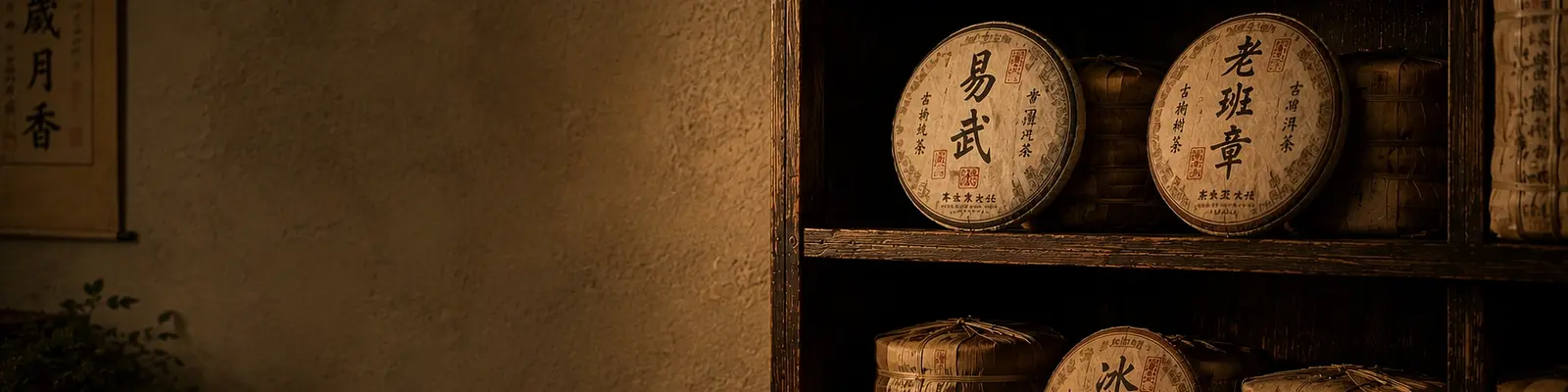
Storage & Aging
How long sealed tea lasts, why pu-erh ages, when to refrigerate, humidity for collectors.
What's the best way to store loose-leaf tea at home?
Five enemies of tea: light, air, moisture, heat, and smells. Defense: opaque airtight tins (not glass jars on a sunny shelf), in a cupboard at stable cool ro...
What humidity is ideal for storing pu-erh?
Target 60–70% relative humidity at 20–25°C. Below 50% RH the fermentation stalls (called 'dry storage'); above 80% you risk mold (Hong Kong/Malaysian 'wet st...
How long does sealed tea last?
Rough shelf life sealed in airtight, dark, cool conditions: green and matcha 6–12 months (refrigerated, longer), white 2–3 years (gets more interesting with ...
Can I store tea in the fridge?
For green tea and matcha — yes, vacuum-sealed and refrigerated extends freshness by months. Let it warm to room temperature for 24 hours BEFORE opening, or c...
Does pu-erh really get better with age?
It's real for sheng (raw) pu-erh, but only if (a) the starting leaf was good and (b) storage was correct. Young sheng is bracing and astringent; over decades...
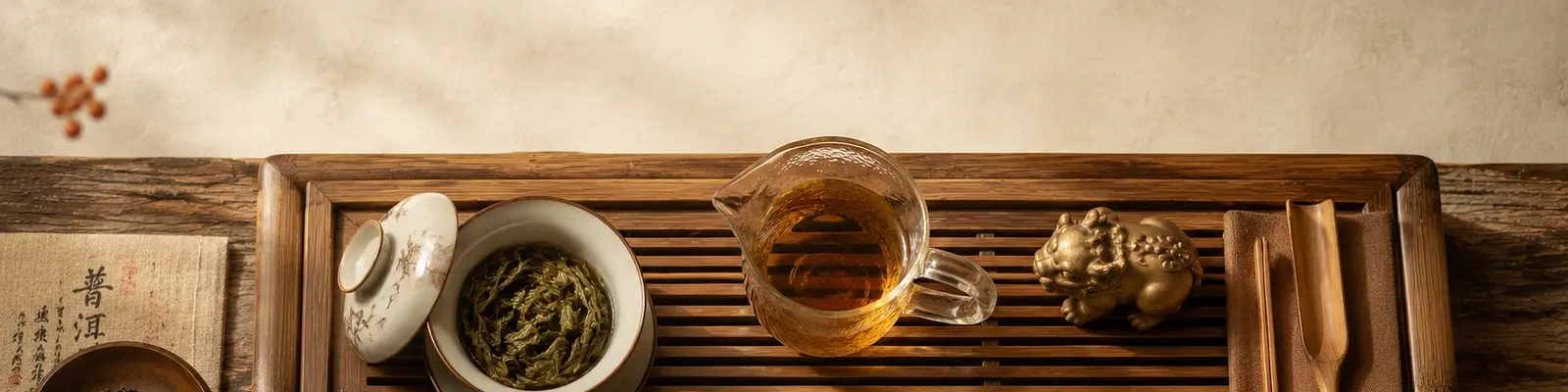
Equipment
Gaiwan vs teapot, yixing clay, fairness cup, thermometers, travel sets — what tools matter and which to skip.
Travel tea sets — what's actually useful?
The essential travel kit: a small (100–150ml) glass or porcelain gaiwan with a lid, 2 tiny cups, a small tin of leaves, and a heat-resistant water source (mo...
What's the best way to measure tea water temperature?
A variable-temp electric kettle (Brewista, Fellow Stagg, Aiden) is the highest-impact upgrade — set it to 85°C and forget it. Cheaper alternative: any kettle...
How do I season a new clay teapot?
Three steps: (1) Rinse thoroughly inside and out with hot water — no soap, ever; (2) Boil the pot fully submerged in clean water for 20 minutes to drive out ...
Do I need a fairness cup (tea pitcher)?
Functional, not decoration. The fairness cup (cha hai, 茶海) is where you pour the entire steeped batch from the gaiwan/pot before serving. Two reasons: (1) it...
What is a yixing clay teapot and do I need one?
Yixing (宜兴) is a town in Jiangsu, China, with a unique purple clay (zisha) that's porous, slightly mineral, and seasons over time. Each pot absorbs the flavo...
Should I start with a gaiwan or a teapot?
Start with a porcelain gaiwan (100–150ml). It's neutral (doesn't absorb flavor), works with every tea type, cheap (€10–25), and teaches you to control temper...
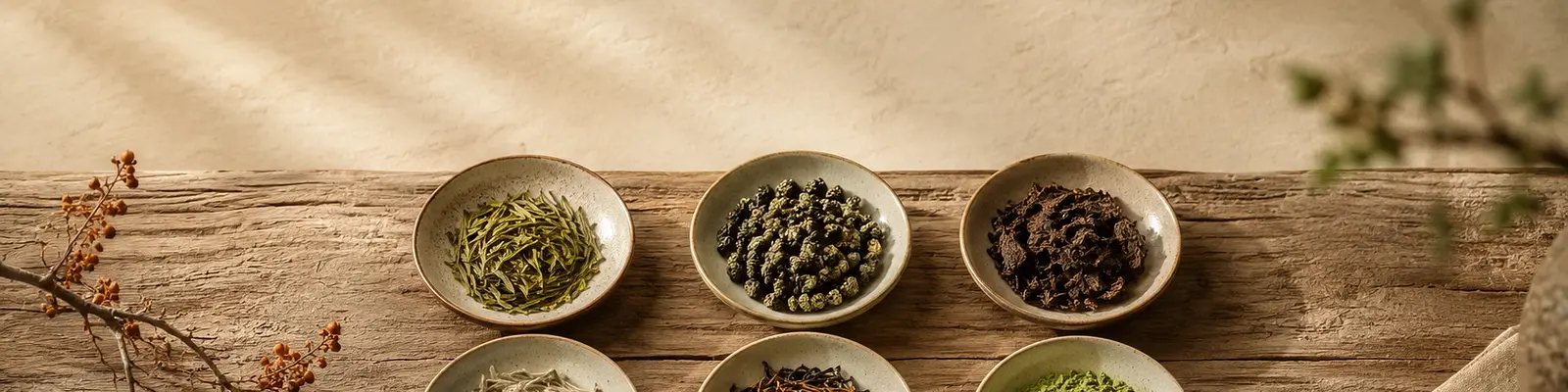
Tea Types
Pu-erh, oolong, green, white, rock teas, regions and varietals — what they are and how they differ.
Single-origin vs blended tea — which is better?
Both have their place. Single-origin tea expresses terroir — it tells you what one specific village, slope, and harvest tasted like that year. Best for conno...
What is gushu (old tree) tea?
Gushu (古树, 'old tree') refers to tea picked from trees over 100 years old — and the truly prized ones are 300–800+ years. These trees have deep roots, comple...
Do aged white tea and aged pu-erh both improve with time?
Both age well but very differently. Sheng pu-erh undergoes microbial fermentation — the leaves chemically transform over decades into something completely di...
What's the difference between Tieguanyin and Dancong oolongs?
Tieguanyin (鐵觀音, 'Iron Goddess') is from Anxi, Fujian — lightly to moderately oxidized, rolled into tight balls, with a creamy floral character (lilac, magno...
What is yellow tea and why is it so rare?
Yellow tea (黄茶, huangcha) is the rarest of China's six tea categories. It's made like green tea but with an added 'sealed yellowing' step (men huang) where t...
Ceremonial vs culinary matcha — which should I buy?
Ceremonial matcha: youngest spring leaves, shade-grown 3+ weeks, stone-milled cold and slow, bright jade green, drunk thin with water (usucha). Premium and p...
What is Wuyi rock tea (yancha)?
Yancha (岩茶, 'rock tea') comes from the steep cliffs of the Wuyi mountains in Fujian. The tea bushes grow rooted in cracks of mineral-rich rock — that terroir...
How do Yunnan and Fujian regions differ for tea?
Yunnan (southwest China) is the cradle of tea — wild ancient trees, big-leaf varietals (Camellia assamica), high mineral soils, monsoon climate. Best known f...
What makes Da Hong Pao tea so special?
Da Hong Pao (大红袍, 'Big Red Robe') is a Wuyi rock oolong with a 350-year legend behind it. The original six 'mother trees' on a Fujian cliff produced tea that...
What's the difference between sheng and shou pu-erh?
Sheng (生, 'raw') is the traditional style: pressed green tea that ferments slowly over decades, starting astringent and grassy and transforming into somethin...
Tasting & Culture
Slurping technique, gongfu ceremony, matcha rituals, Chinese tea names, why cups have no handles.
Why do traditional tea cups have no handles?
Two reasons, one practical one philosophical. Practical: if a cup is too hot to hold, your tea is too hot to drink — the cup IS your thermometer. Holding the...
What is the gongfu cha ceremony?
Gongfu cha (功夫茶, 'skilled tea making') is a Chinese brewing approach that originated in Chaozhou and spread through Fujian and Guangdong. It's less a fixed c...
Why do Chinese teas have so many different names?
Same tea, multiple labels: the Chinese characters (鐵觀音), pinyin romanization (Tieguanyin), poetic English translation (Iron Goddess of Mercy), and sometimes ...
What's the right way to drink matcha?
Tools: a chawan (bowl), a bamboo whisk (chasen), and a small sieve. Method: sift 2g (~half a teaspoon) of matcha into the warm bowl to break clumps. Add 70ml...
Why do tea pros slurp loudly when they taste?
Slurping aerates the tea — sucking it in with air across the palate atomizes it into a fine mist that hits all your taste buds and goes up into the retronasa...
Buying & Quality
Telling authentic from fake, picking grades, freshness checks, why prices vary, packaging that matters.
Vacuum-sealed vs paper-wrapped tea — does packaging matter?
Depends on the tea. Greens, matcha, lightly-oxidized oolongs: vacuum-sealed protects aromatics — non-negotiable. Pu-erh: paper-wrapped is correct (pu-erh nee...
How fresh should green tea be when I buy it?
Real, especially for spring greens. Quality Chinese green tea (Longjing, Anji Bai Cha, Bi Luo Chun) peaks within 3–6 months of harvest and noticeably loses i...
Why is some tea so expensive?
Five factors compound: (1) Plucking — hand-picked first-flush 1-bud-2-leaves is 50× the cost of machine-harvested mature leaf; (2) Terroir — high-altitude mo...
What grade of tea should I buy as a beginner?
Skip both the bottom and the top. Don't buy supermarket bagged tea (industrial dust) — but also don't drop €100 on a famous-mountain Da Hong Pao your palate ...
How can I tell if pu-erh is authentic?
Check (in order): (1) Source — buy from vendors who name the producer, region, and year; (2) Wrapper — authentic factory cakes (Dayi, Xiaguan, Menghai) have ...
Health & Caffeine
Caffeine levels, L-theanine, evening drinking, fasting, digestion, antioxidants — what tea does to your body.
Is tea good for digestion?
Real, especially for shou pu-erh and aged sheng. Pu-erh contains gallic acid and microbial byproducts that stimulate bile production and gut motility — Chine...
Can I drink tea while fasting?
Plain tea (no milk, no sugar, no honey) is essentially zero calories and is generally fine during a fast. It may even help — caffeine and catechins support f...
Is green tea actually healthier than black tea?
Different, not better. Green tea has higher levels of EGCG (the most-studied catechin), good for oxidative stress and metabolism. Black tea has theaflavins a...
Can I drink tea at night?
Caffeine sensitivity varies wildly, but rules of thumb: avoid black tea, matcha, and dark oolongs after 4 PM if you sleep light. Safer evening choices: well-...
Does L-theanine in tea really calm you down?
Yes, with caveats. L-theanine is a non-protein amino acid found almost exclusively in Camellia sinensis. EEG studies show it increases alpha-wave activity in...
How much caffeine is in different teas?
Per 240ml cup (rough): matcha ~70mg (you drink the whole leaf), black tea 40–70mg, oolong 30–50mg, green tea 25–40mg, white tea 15–30mg, decaf tea <5mg. F...
Brewing
Water temperature, ratios, steeping times, gongfu vs Western brewing — everything about the act of making tea.
Can I re-boil water for tea?
It's real, but the effect is small. Boiling drives off dissolved oxygen, which gives water a fuller, livelier mouthfeel. Re-boiled water tastes 'flat' to tra...
How do I make cold brew tea?
Use double the leaf you'd use for hot brewing. Put leaves in a jar, fill with cold filtered water (1g per 15ml), seal, refrigerate for 6–12 hours. Strain and...
Why does my tea taste astringent or muddy?
Three usual suspects, in order: (1) water too hot — drop 5–10°C, especially for greens and delicate oolongs; (2) over-steeped — cut 30–60 seconds from your t...
What's the difference between gongfu and Western brewing?
Western: a lot of water, little leaf, one long steep (~3 min). Designed for big mugs and casual drinking. Gongfu (功夫): little water, lots of leaf, many short...
Does water quality really matter for tea?
Water is 98% of your cup, so yes — it matters enormously. Target soft to medium-soft mineral content (TDS 30–80 ppm). Heavy chlorination dulls aromatics; ver...
How long should I steep tea — first and subsequent infusions?
Western steeping (1g per 50ml): green/white 1–3 min, oolong 2–4 min, black 3–5 min, pu-erh 3–5 min. Gongfu steeping (1g per 15ml): start with 10–15 seconds f...
How much tea leaf should I use per cup?
Western style: 1g of leaf per 50ml of water (about 1 teaspoon per 250ml cup). Gongfu style: 1g per 15–20ml — much stronger, designed for short repeated steep...
What water temperature should I use for each tea type?
Quick reference: green tea 75–80°C, white tea 80–85°C, oolong 90–95°C, black/red tea 95–100°C, pu-erh 95–100°C, matcha 70–80°C. Lower temperatures preserve d...
Why does my tea taste bitter?
Almost always one of three things: water too hot, steeping too long, or too much leaf for too little water. For green tea specifically, use 75-80°C water and...
How should I store loose leaf tea?
Airtight container, away from light, heat and strong smells — that covers most teas. Greens and whites are the most fragile and should be drunk within 6-12 m...
What is the difference between red tea and black tea?
They're the same thing — it's a translation quirk. In Chinese, the tea is called 红茶 (hong cha) meaning 'red tea', named for the color of the liquor in the cu...
How many times can you re-steep tea leaves?
With Chinese tea brewed gongfu style, 6-10 infusions is completely normal, and quality oolongs or aged pu-erh can go 15+ times. The secret is using a lot of ...
What temperature should I brew oolong tea at?
For most oolongs, 95°C (just off the boil) is the sweet spot. Light green oolongs like Tie Guan Yin can go slightly cooler at 90°C, while roasted Wuyi rock t...