Collection
Pu-Erh Tea Collection
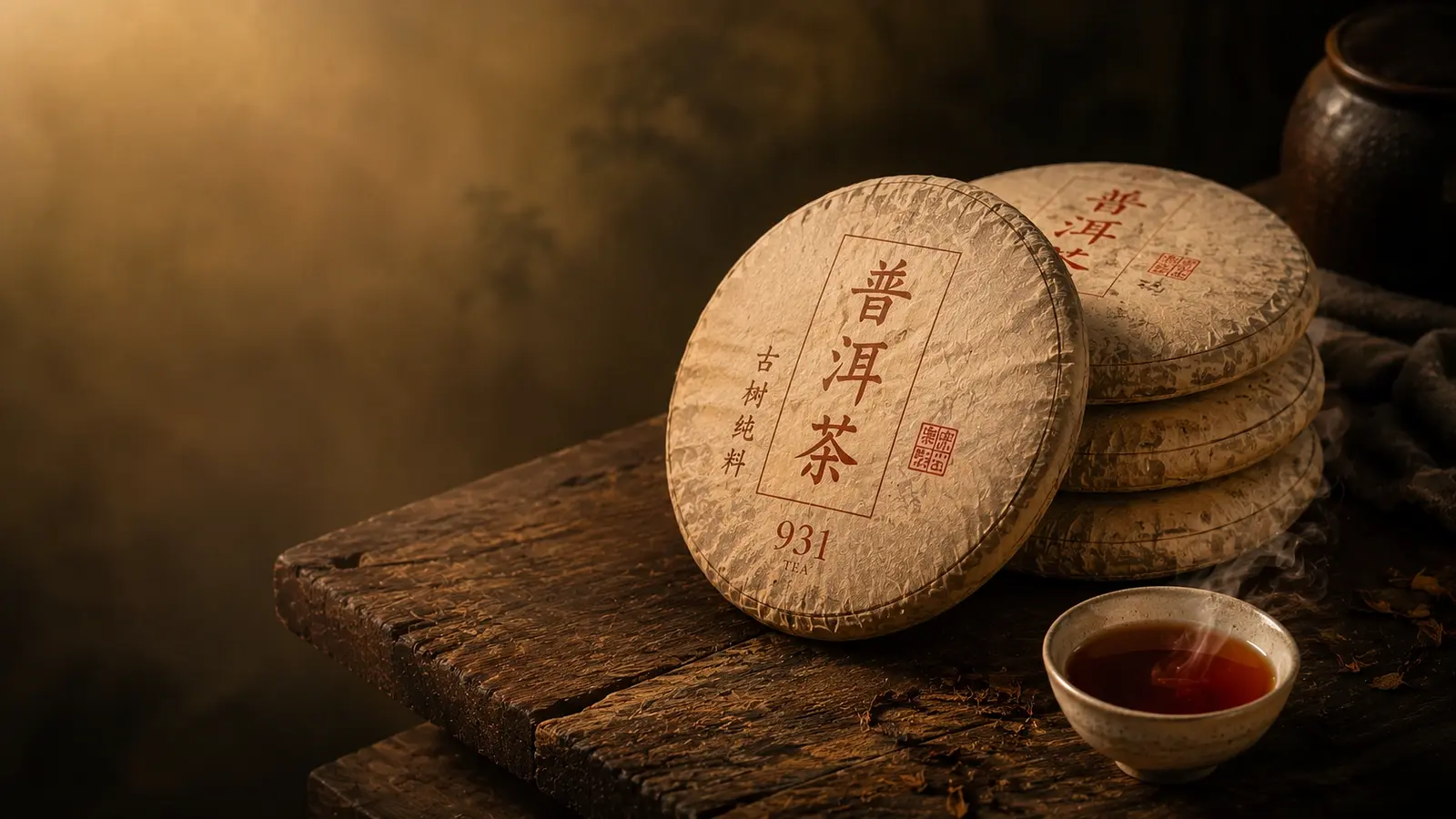
Pu-erh is the world's most collectible tea — a living, breathing leaf that deepens in complexity with every passing year. No other tea rewards patience quite like a well-stored pu-erh cake, where time itself becomes the final ingredient.
The King of Aged Tea
Pu-erh is the only tea in the world that improves with age — not months, but decades. A cake pressed in 2005 tastes fundamentally different from one pressed in 2022, and a 1990s vintage occupies a different universe entirely. This is tea as a living thing: microbes slowly transform bitter, astringent leaves into something sweet, thick, and profoundly complex.
The magic happens in Yunnan province, where ancient tea trees — some over 800 years old — grow in misty mountain forests at 1,400–2,000 metres altitude. These are not manicured bushes; they are wild trees with deep root systems that draw minerals from ancient soils, producing leaves with a depth of flavour that plantation tea simply cannot match.

From Menghai Tea Factory — The Gold Standard
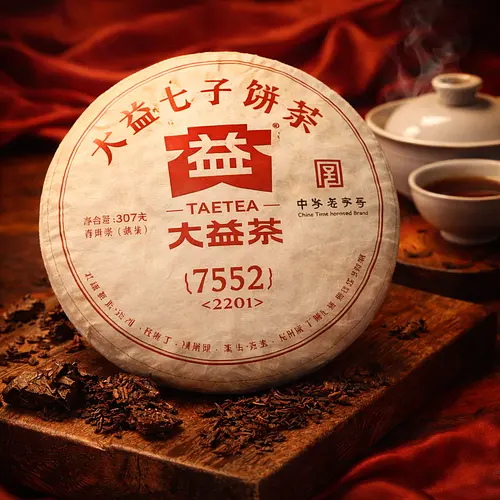
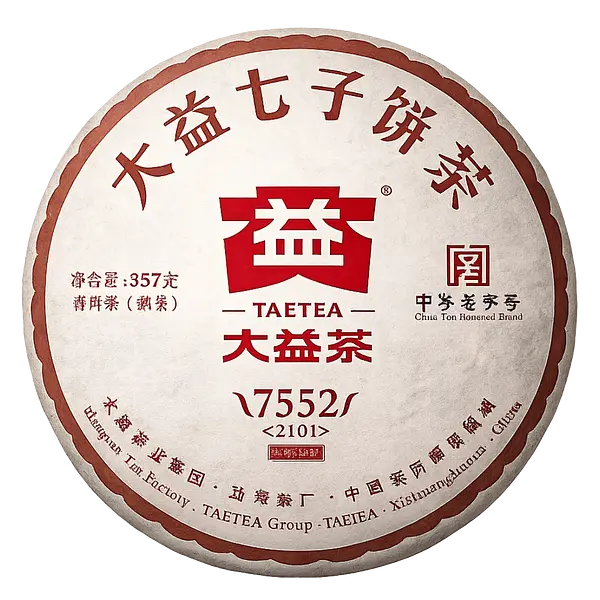
大益 Dayi 7552
2021 · Menghai Tea Factory / TAETEA 2021 · Menghai Tea Factory / TAETEA · Xishuangbanna, Yunnan
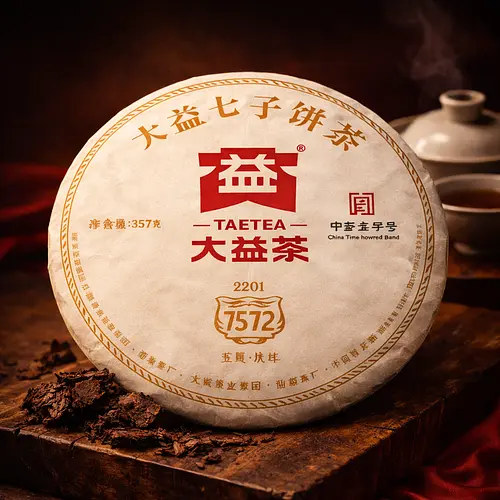
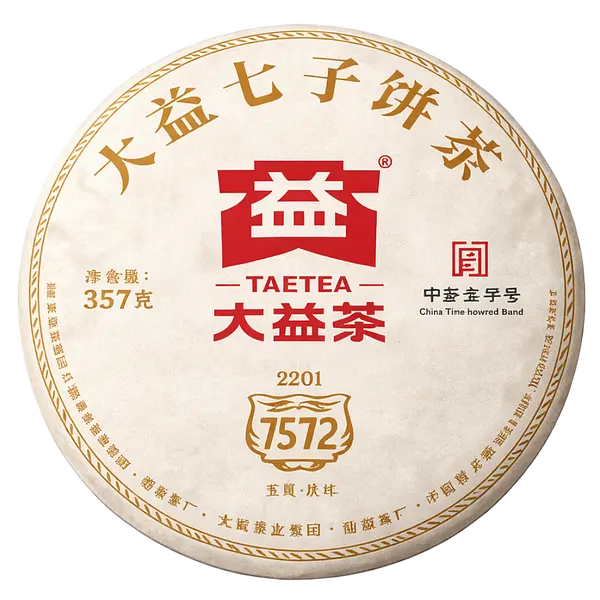
大益 Dayi 7572
2022 · Menghai Tea Factory / TAETEA 2022 · Menghai Tea Factory / TAETEA · Xishuangbanna, Yunnan
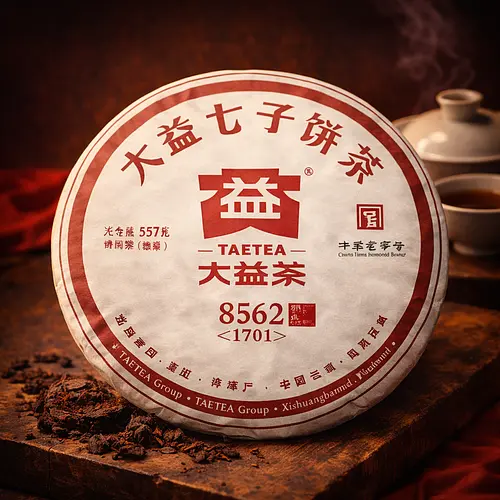
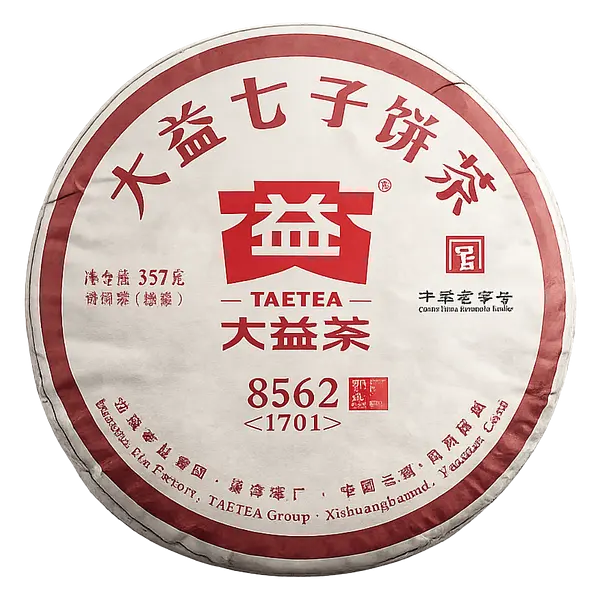
大益 Dayi 8562
2017 · Menghai Tea Factory / TAETEA 2017 · Menghai Tea Factory / TAETEA · Xishuangbanna, Yunnan
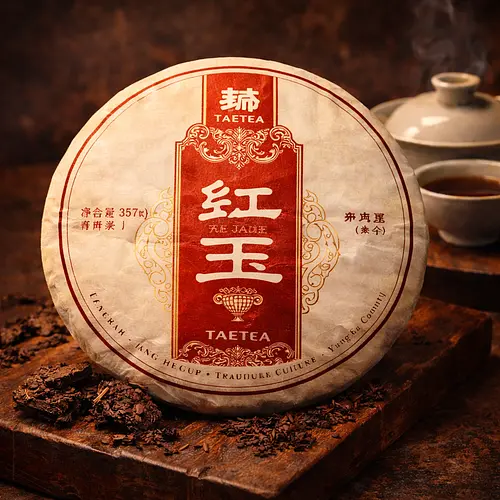
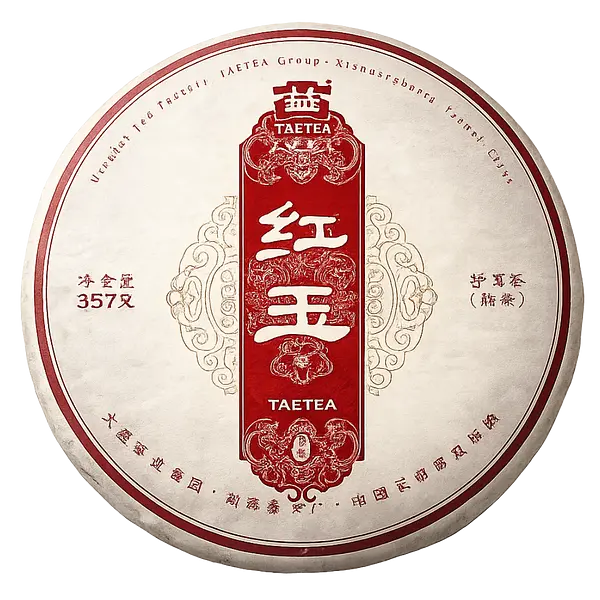
大益红玉 Hong Yu
2023 · Menghai Tea Factory / TAETEA 2023 · Menghai Tea Factory / TAETEA · Xishuangbanna, Yunnan
"A well-aged pu-erh cake is closer to a fine Burgundy than to any other tea — it rewards patience, careful storage, and an open mind."
— The philosophy behind every cake in our collection
Sheng vs Shu — Two Paths, One Leaf
Sheng (raw) pu-erh is the original form: sun-dried leaves pressed into cakes and left to age naturally for years or decades. Young sheng is vibrant, bitter-sweet, floral — a tea that evolves in your cup over fifteen steeps. Aged sheng softens into honey, dried fruit, and camphor.
Shu (ripe) pu-erh was invented in 1973 at the Menghai Tea Factory to simulate decades of aging in weeks. Through controlled wet-piling (wo-dui), the leaves develop that dark, earthy, smooth character that would otherwise take twenty years. Shu is not a shortcut — it is a different destination entirely: think dark chocolate, aged wood, clean earth.
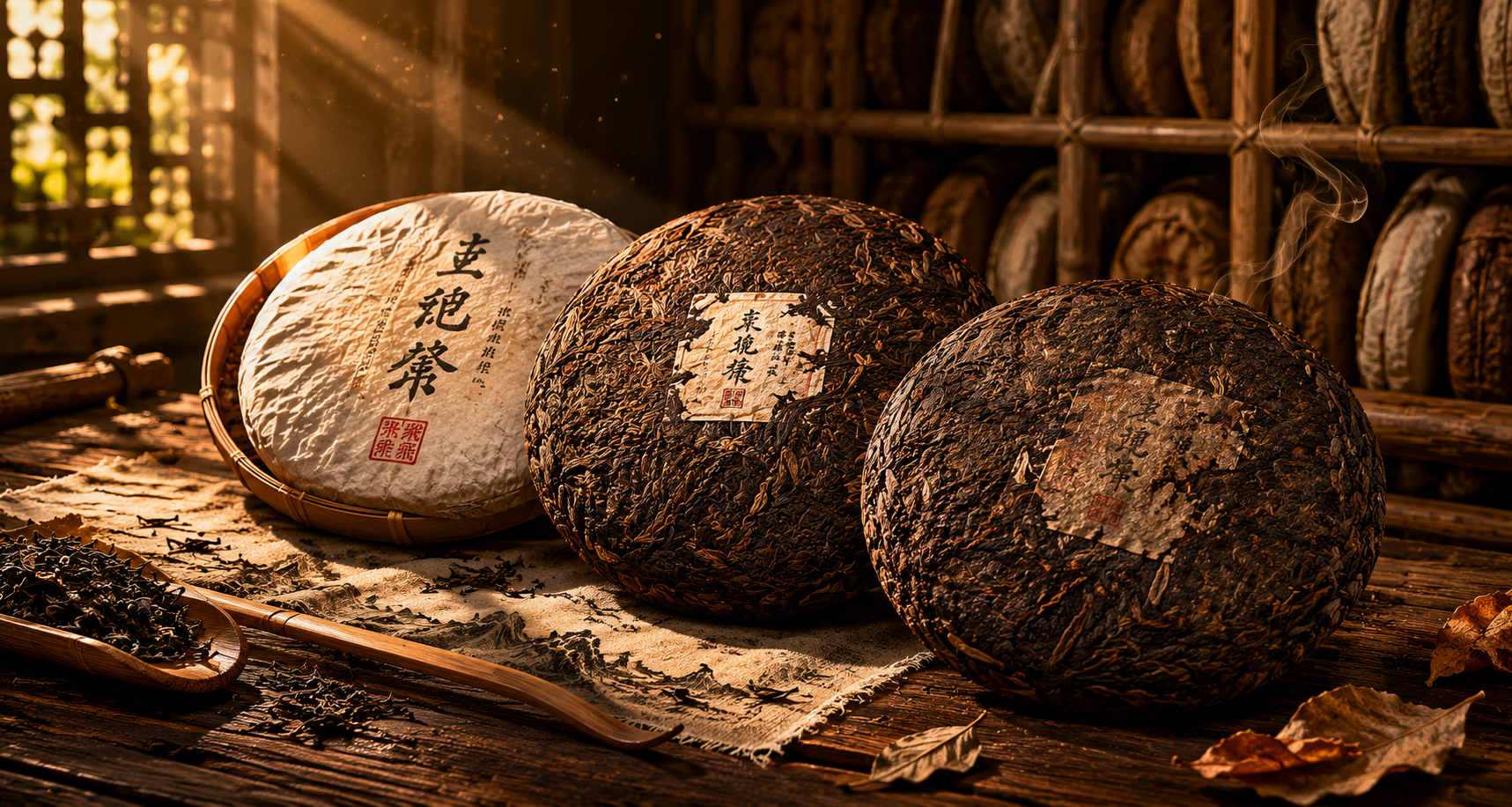
Artisan & Single-Origin Producers
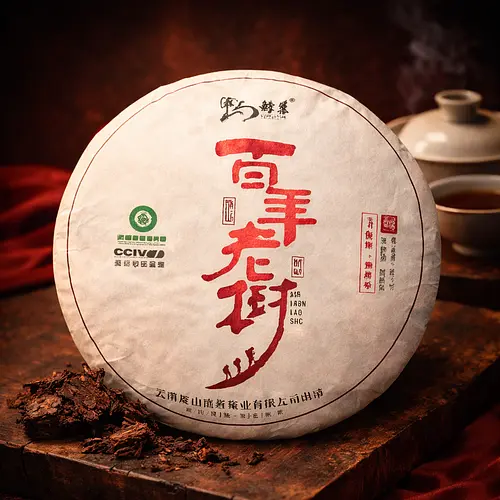
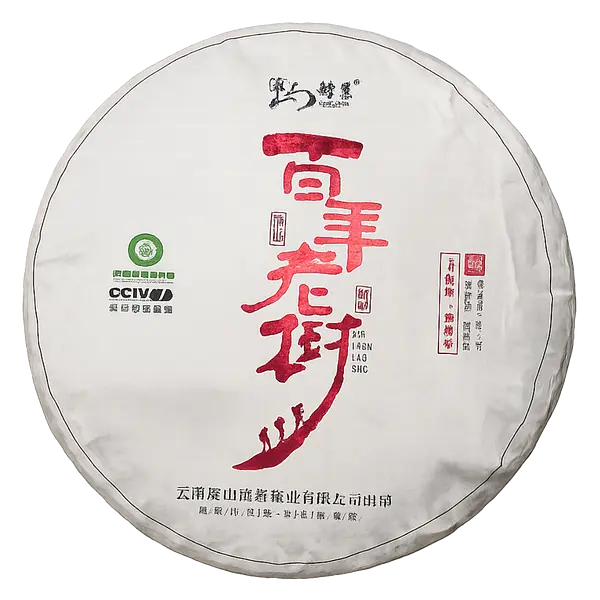
百年老树 Bainian Laoshu
2022 · Yunnan Feishan Maochu Tea Co. 2022 · Yunnan Feishan Maochu Tea Co. · Yunnan
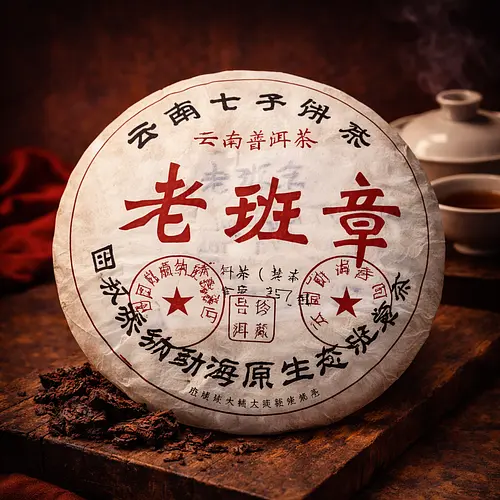
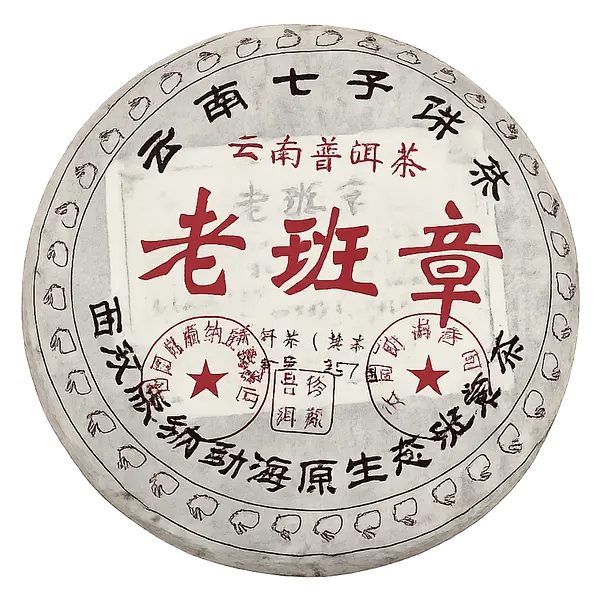
老班章 Lao Banzhang
2015 · Menghai Original Ecology 2015 · Menghai Original Ecology · Lao Banzhang, Menghai
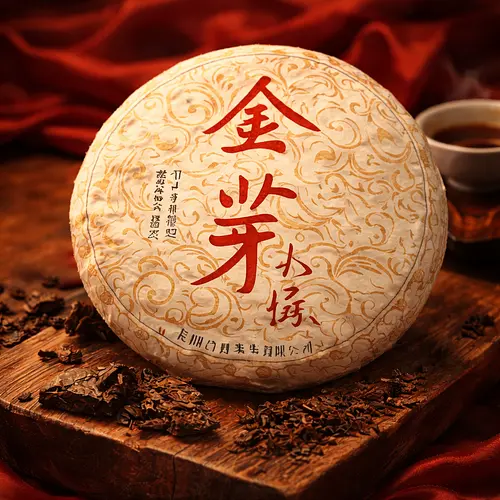
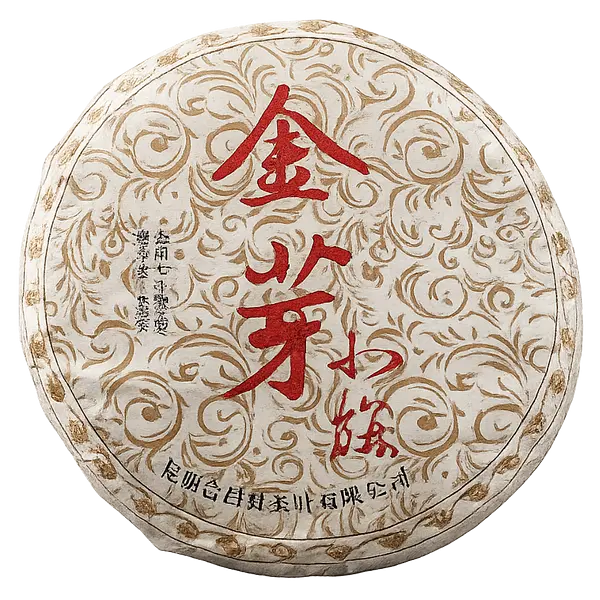
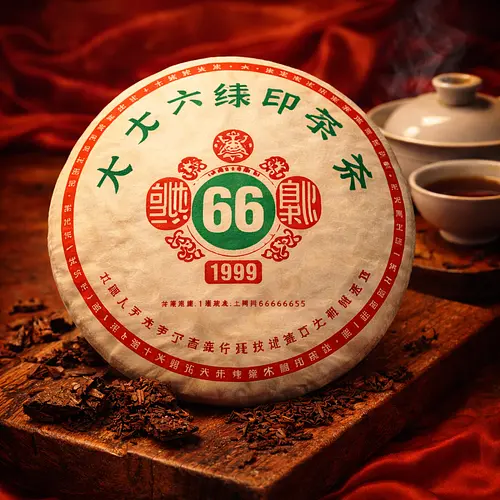
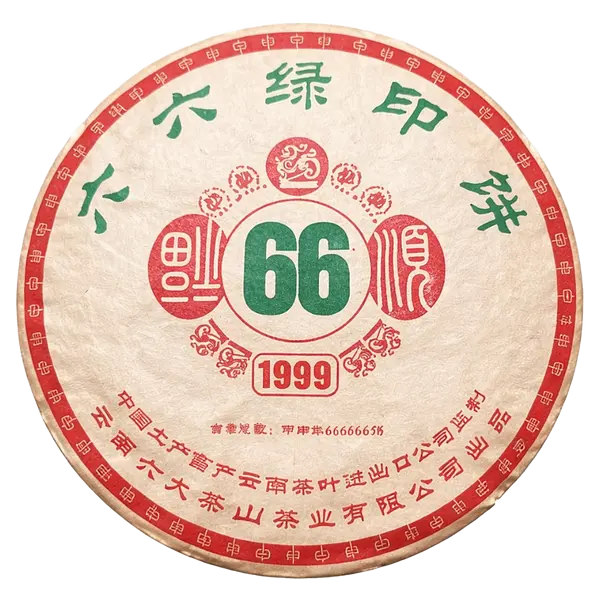
大绿印 Da Lü Yin 66
1999 · Liu Da Cha Shan Tea Co. 1999 · Liu Da Cha Shan Tea Co. · Xishuangbanna, Yunnan
Starting Your Collection
Every pu-erh journey starts somewhere. We recommend beginning with a well-made shu for its approachable character, then exploring a young sheng to understand what aging will transform. The real magic happens when you buy two cakes of the same tea, drink one now, and store the other — in five years you will taste the difference time makes.
All our pu-erh ships worldwide with free delivery on qualifying orders. Every cake is sealed at origin and stored in climate-controlled conditions until it reaches your door.
Frequently Asked Questions
What is the difference between sheng and shu pu-erh? +
Sheng (raw) pu-erh is pressed and aged naturally over years or decades, evolving from bright and astringent to deep and honeyed. Shu (ripe) pu-erh undergoes an accelerated fermentation called wo-dui that produces a dark, smooth, earthy cup in weeks rather than decades. Both start from the same sun-dried Yunnan maocha.
How long can pu-erh tea age? +
There is no hard expiration. Properly stored sheng pu-erh continues to improve for 30–50 years or more, with some vintage cakes from the 1950s still drinking beautifully. Shu pu-erh also benefits from 5–15 years of rest, which rounds off any residual wo-dui earthiness.
How should I store pu-erh tea? +
Keep cakes in a clean, odor-free space with moderate humidity (60–75%), stable temperature (20–28°C) and gentle airflow. Avoid plastic wrap — pu-erh needs to breathe. A dedicated shelf or cardboard box works well for a small collection.
Is older pu-erh always better? +
Not necessarily. Age improves a tea only if the raw material and storage are both good. A poorly stored cake will taste flat or musty regardless of age, while a high-quality young sheng can be a thrilling drink on its own terms. Taste across ages to find what you prefer.
How do you brew pu-erh gongfu style? +
Use 7–8g of leaf per 100ml gaiwan. Rinse once with boiling water and discard. Steep at full boiling (100°C) — start at 10 seconds for shu or 8 seconds for young sheng, adding 3–5 seconds per infusion. A good pu-erh will comfortably yield 10–15 infusions.